Welcome to the Wanderbox Builds blog series, a showcase of some of our semi-custom adventure vehicle customer builds in all their varied forms, from 24-foot just-the-essentials backroad bivies to 44-foot top-shelf land yachts. This series provides an in-depth, behind-the-scenes look at each build, from the customer’s requirements and how we achieved these to specific design and construction techniques employed at each stage of the rig’s build-out.
Wanderbox: Built to Travel Off the Beaten Path
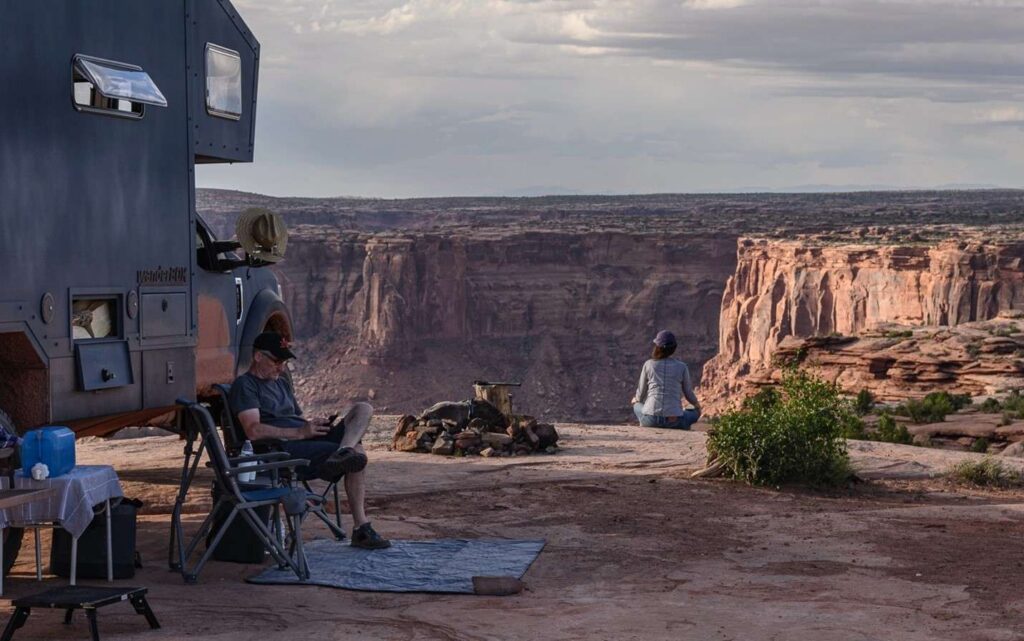
A Wanderbox is a semi-custom adventure camper designed and built for on- and off-pavement exploration, whether you’re a “weekend warrior” or a boondocking full-timer. Every Wanderbox is hand-built by our craftspeople in Colorado using advanced materials and manufacturing techniques that enable a high degree of configurability yet ensure high-quality standards and serviceability in all rigs we produce. Craftsmanship, capability and durability are non-negotiable features of every Wanderbox.
What makes Wanderbox different is our semi-custom creations blend the off-pavement capabilities of an Expedition Vehicle with luxurious appointments inside and out, for a price that’s just a little more than a traditional “Super-C” Class C motorhome. Starting at $300K and going up to about $1 million for our high-end builds, our combination of configurability, quality and value is unique.
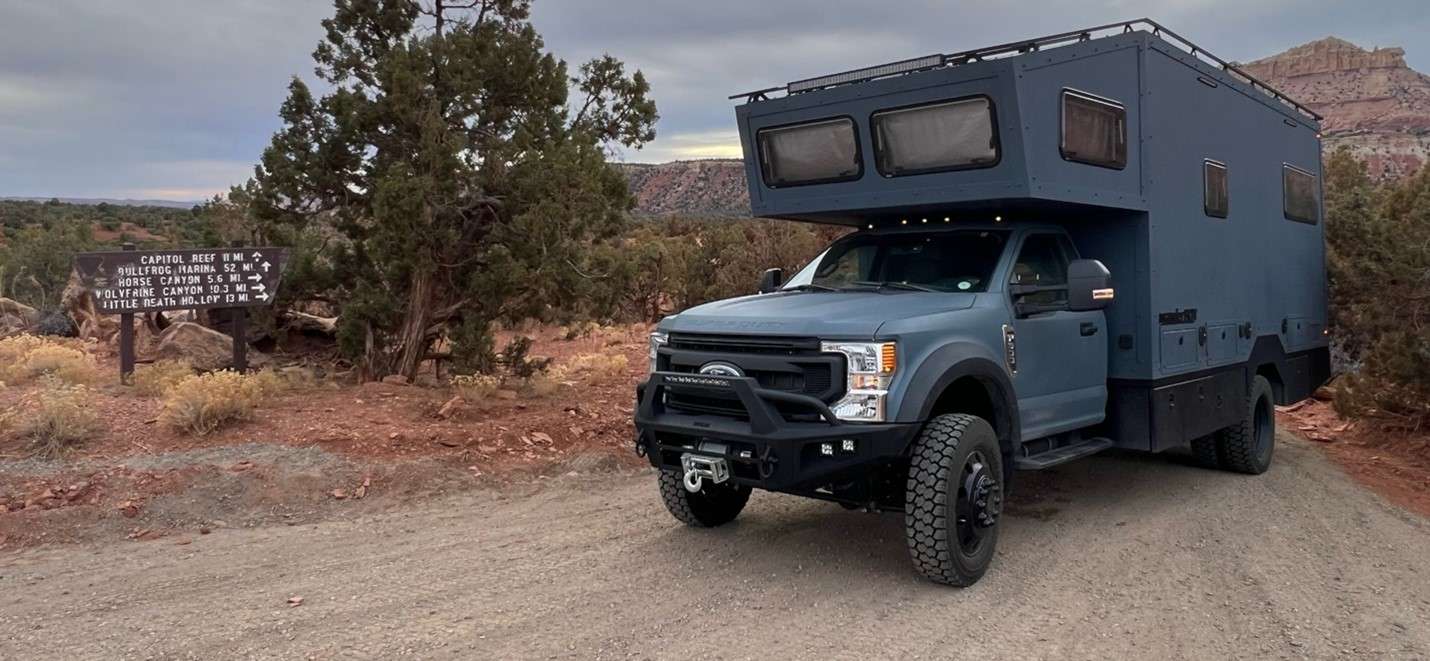
If you’ve owned a traditional motorhome—even one of the better ones—and tried to take it down dirt roads to get away from the crowds, you’ve probably found they aren’t designed for the stresses of rough washboard roads and camping/living in comfort for longer periods of time off-grid. Wanderboxes are—and that’s what we’re here to shine a light on.
For this series of blog posts, we’ll take you behind the scenes and show you how Wanderboxes are built, starting with one we completed and delivered in 2024. Since each Wanderbox is custom configured to meet the lifestyle and needs of its owner, each build is a unique story and presents its own challenges and opportunities. Remote workers? Four kids? Two e-bikes? Gourmet chef? Avid hunter? Prepper? Comfort in climates from Alaska to Mexico? Not a problem with Wanderbox.
WanderBeast: From Dream to Design
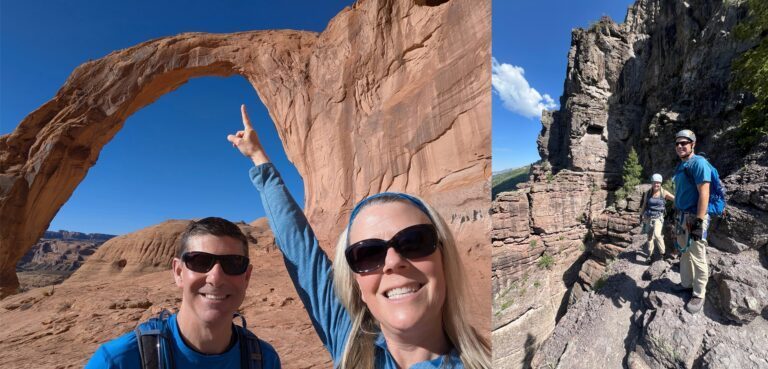
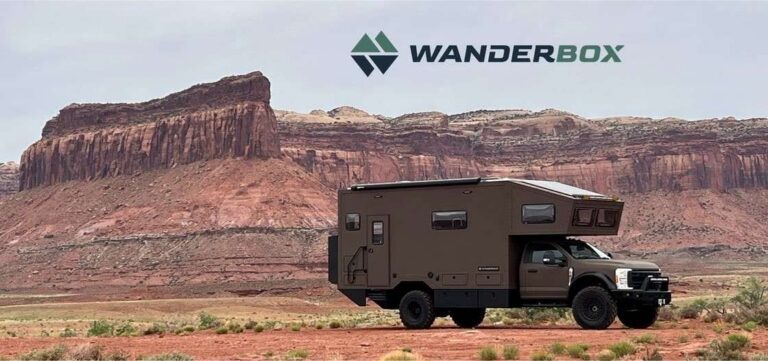
For this first Wanderbox Builds installment, we’re focusing on Jay and Kelly’s build, a rig they now lovingly call WanderBeast. We met them at an Overland Expo show in 2023, and after a few months of dreaming, they called us and said they were ready to start their build. Jay runs his own company, and Kelly works for a Fortune 500 company. The best part? They both work remotely so they can go out farther for extended periods of time and still stay connected to work. They have their dog Ripley with them wherever they go, so we made some design decisions to accommodate her.
The first stage of the Wanderbox build process is to sit down with each customer in person or over a video call to understand their lifestyle, what they like to do, where they like to go, how long they like to be gone, and who they’re doing it with. This helps us design the perfect Wanderbox to fit their needs like a glove.
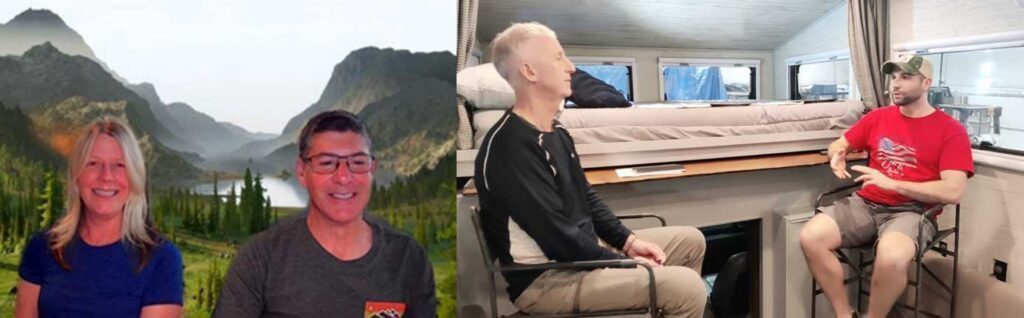
This is the requirements-gathering stage that many projects have, but ours is unique because it’s guided by our team’s knowledge of, and love for, outdoor adventuring and living. We’re experts at RVing, boondocking, and living in compact spaces. Our passion and experience help us connect with what customers want to do in their Wanderbox so that each creation is designed and built to meet those needs.
Most of our customers are experienced RVers who have had at least one, and often many, RVs or motorhomes and know a lot about what they want. That helps us with design and configuration when we go through our process, which first focuses on the “why” before we delve into the “how.”
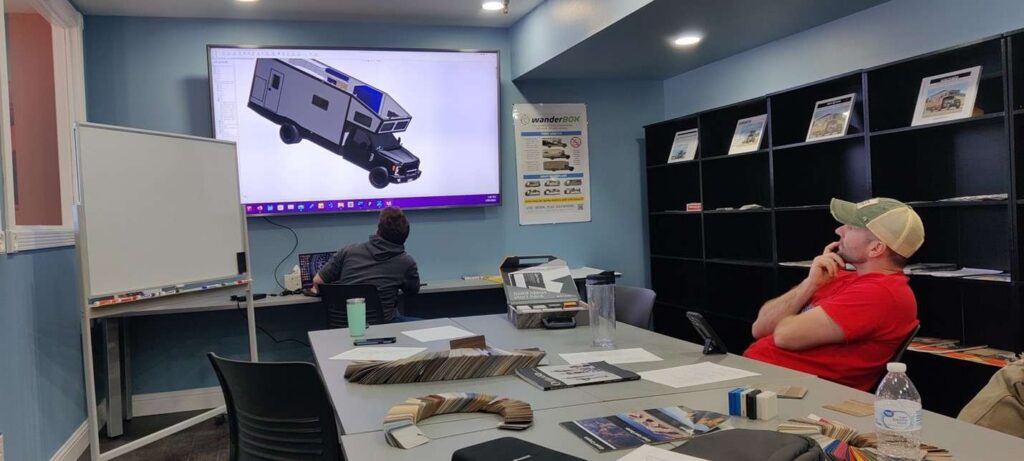
A typical Wanderbox build is five to nine months, depending on the complexity of the design. We work closely with the customer throughout the build, making design decisions and providing progress updates. It usually takes from one to three weeks to complete the basic design of a customer’s rig. Not all decisions need to be made during this initial period, some can be made later when customers can walk through and get the “feel” of their Wanderbox. We encourage customers to be hands on and stay involved in their builds, whether through in-person or virtual check-ins.
Experience and R&D Behind Each Build
A great deal of world-class Expedition Vehicle and RV experience and knowhow is utilized when we build a Wanderbox. Our team has cumulatively built over 500 highest-quality off-road campers over our careers, and we leverage this deep bench of experience in the design and construction of each of our hand-built adventure campers.
Additionally, extensive research and development go into the design of all of our Wanderbox models. We use computer-simulated and real-world testing to ensure the structural and architectural construction of our units will stand the test of time and operate safely and dependably in the off-pavement environments we build them for. Finite Element Analysis (FEA) and destructive testing are done on major structural components to ensure any new design meets our strength, durability and quality standards.
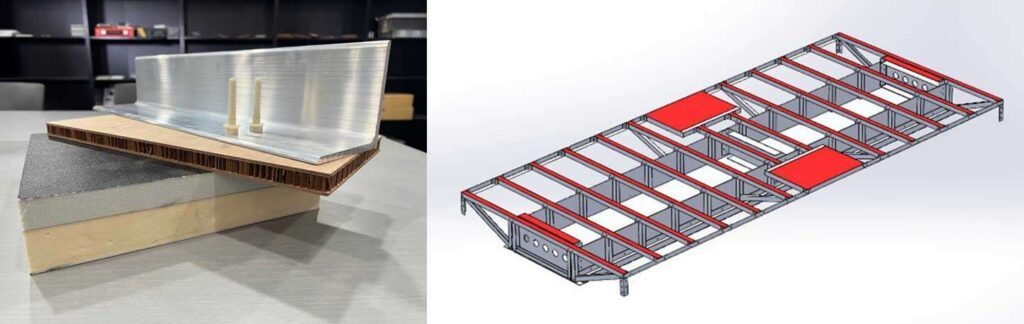
From a design and construction standpoint, each Wanderbox has more in common with a yacht or an airplane than a traditional motorhome, built to thrive in the off-the-beaten-path environments they’re meant to traverse and dwell in. From the computer-aided design of our all-aluminum exoskeleton frame and rugged four-season composite panel exterior skin, to the advanced systems under the floor that power and climate-condition the habitat, to the innovative design of our interior living-space components, a huge amount of research, experience, and skill goes into making the perfect off-grid, four-season adventure camper we deliver to each customer.
One of the first sets of decisions to be made is the size of the Wanderbox and what chassis to build on. We offer several chassis options, and the choice is usually driven by the customer’s personal preference for Ford, Chevy, or another brand, and whether they want a more comfortable light-duty chassis like a Ford Super Duty or Chevy Silverado, or a beefier medium duty chassis.
Choosing the Right Model and Chassis
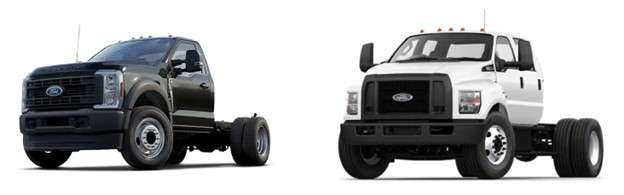
Making an informed chassis choice also depends on how many people will come along on their adventures and how much stuff they will take with them. How much battery power and solar they need for air conditioning and cooking, and how much water they’ll need and wastewater they’ll produce.
We order a “chassis cab” truck from the manufacturer, a bare-bones truck with no preinstalled bed or anything else above the chassis’ frame rails, but with the chassis features and options we need to build the customer’s Wanderbox, like diesel engine, heavy duty frame and brakes, dual fuel tanks, etc.
Customers can choose a two-door regular cab or a crew cab with four doors and four seats, depending on the preferred chassis. Crew cabs are great when you have kids or dogs and want to load up fast and easily. Depending on the model chassis, choosing a crew cab typically adds about three feet to the length of the unit, and when factoring in the total length goal of the rig, shortens the camper cabin’s living space respectively.
Each chassis also has its own GVWR (Gross Vehicle Weight Rating), or how much weight the truck with everything on it including camper body, fuel, water and people can carry, as well as GCWR (Combined Rating) that determines overall weight capacity including towing. The weight rating is key for designing a Wanderbox because we feature larger water storage and more batteries than a typical RV, so we need a higher GVWR truck.
For customers with kids and/or dogs who want a 4-door crew cab, we build on the Chevy 6500HD with a GVWR of 23,000 pounds. Both the Ford F-600 and Chevy 6500HD chassis are used for our Outpost™ line, which can go up to 35’ in length. If the customer needs something larger or with more cargo carrying capacity (CCC), we have our Fortress™ line which goes up to 44-feet in overall length. Chassis options include the Ford F-650/F-750 chassis cab (up to 37,000+ pounds GVWR), the cab over engine (COE) Chevy 7500XD (up to 33,000 pounds GVWR), and the International MV/HV (26,000-50,000+ pounds GVWR), which offer plenty of capacity for a larger family or just to have all the space you’ll need.
Determining The Best Length For Your Wanderbox
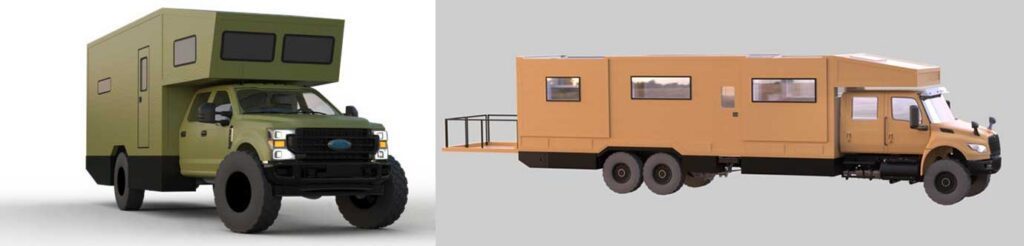
The proprietary camper platform system we’ve developed for both our Outpost™ and Fortress™ models allows us to build camper shell habitats in a wide range of lengths, from 10-feet for our smallest units, up to 30-feet for our longest ones, with or without cabover sleeper berths depending on the truck chassis.
Determining what length Wanderbox is right for you starts with thinking through all you want to do with your Wanderbox.
- Want to get down as many dirt roads as possible but still camp in comfort? Our smaller 24- and 26-foot models might be best.
- Have kids, dogs and/or want to have plenty of room and provisions for long stays? Our 29-to 33-foot models offer more room and comfort but still will get you down maintained dirt roads if they aren’t too narrow or rough.
- Want a luxurious home on wheels with all the comforts of home that also looks badass? One of our larger 35-foot-or longer units might be for you…
Depending on the make, model and size of the cabin/box/habitat, we can either order the truck from the manufacturer with the required wheelbase, or we can have the frame stretched to the length needed for the box to sit on. We work with upfitters that have been stretching medium duty trucks for over 50 years.
We offer an un-matched range of size and features in our various models, which are all listed on our website. The best way to determine the best length for your Wanderbox is to think about your needs, research our options, and schedule a call with us to discuss in depth.
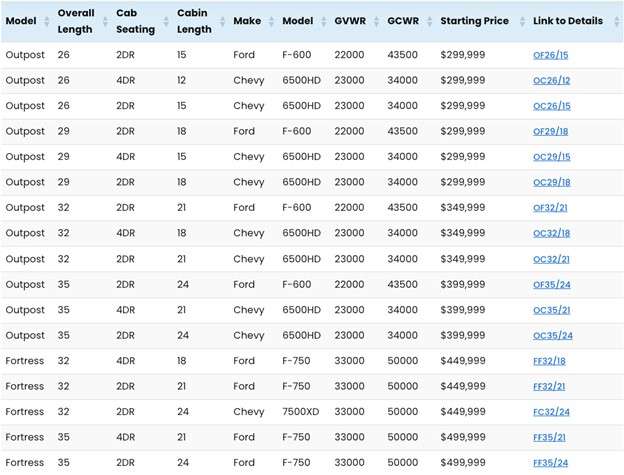
which model and chassis might be best for your dream adventure rig.
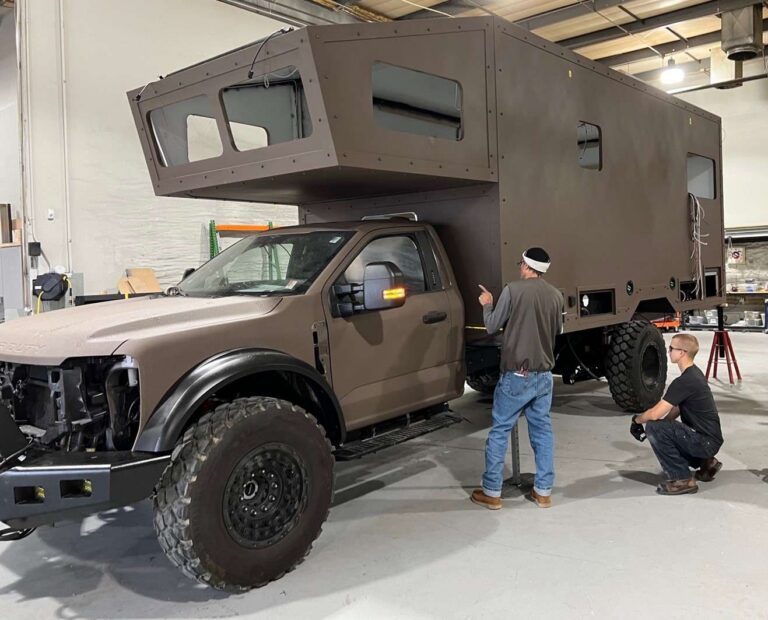
Jay and Kelly didn’t need a crew cab since it was just the two of them and the dog, so they opted for the Ford F-600 with a regular cab, a great, solid truck with plenty of carrying and towing capacity.
Purpose-Designed Custom Floorplans
One of the main things that makes Wanderbox unique in the market is the customizability for each customer unit we build. We offer a lot of options, from 5 different types of toilets to lithium battery bank options from 5 to 60 kWh and fresh water capacities from 40 to over 200 gallons, so that our customers have lot to choose from when they imagine what their Wanderbox can be.
The options can sometimes be daunting, so we use a proven process to guide our customers through the design phase, including having many pre-built designs they can review and choose from. We utilize Computer Aided Design (CAD) software to help visualize what your floorplan will look like. This typically includes overhead floorplan views like you see when shopping for traditional RVs, but also high-quality CAD “renderings” that provide a very lifelike perspective of how your custom Wanderbox will look and feel.
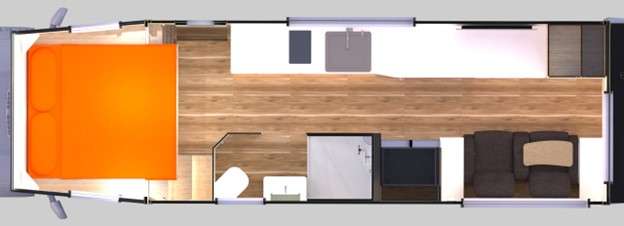
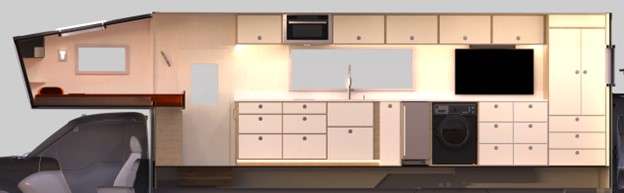
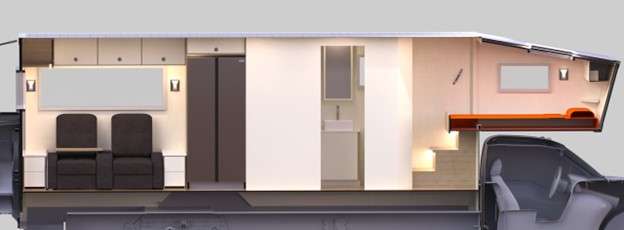
The process we go through to complete the design of a customer’s Wanderbox before we start construction is both iterative and “just in time” – meaning we tackle the big picture stuff up front like location of major components inside and out and then work through all the details like interior materials and colors, until the design is complete.
Quality, appearance, durability and weight are the key factors we use to decide which options are best for each Wanderbox. Want a super-lightweight rig that can get down Jeep roads? We help you pick the materials that we know will keep your rig’s weight at a minimum. Building a large rig where comfort is most import and the chassis you’ve chosen can carry a lot of weight? We help you review and evaluate the different options to meet your specific lifestyle needs.
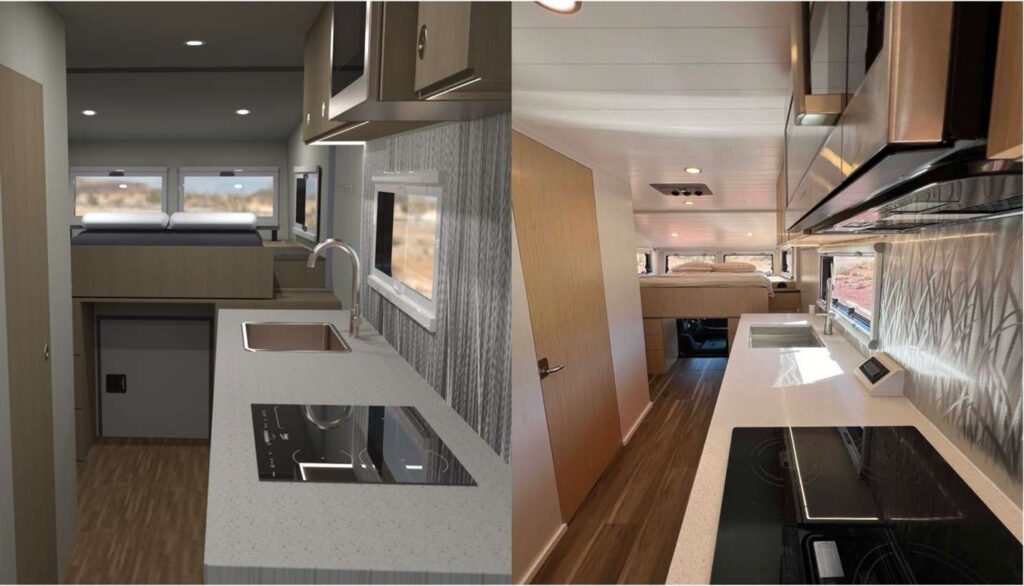
Once the chassis is selected and initial floorplan decisions are made, we move on to selecting appliances, wall-, ceiling- and floor materials and colors, lighting and outlet options and locations, etc. We document every choice in a Design Guide, which captures the initial design choices plus any changes made during the project. Any changes are recorded and signed off on, and an updated Design Guide version is created, so there’s never any question about what features, options, and selections your Wanderbox will have.
When the design phase is completed, our team begins a rigorous analysis of all aspects of the design to ensure there will be no issues building the customer’s dream Wanderbox. We consider the location of and loads on plumbing, electrical and other systems, do a thorough weight analysis to ensure the build meets the unit’s weight goals, etc. Complete build engineering CAD drawings and Cut Lists are created, ensuring our engineering and manufacturing teams are in complete sync as to what we’re building. We take the old mantra that quality is designed in seriously.
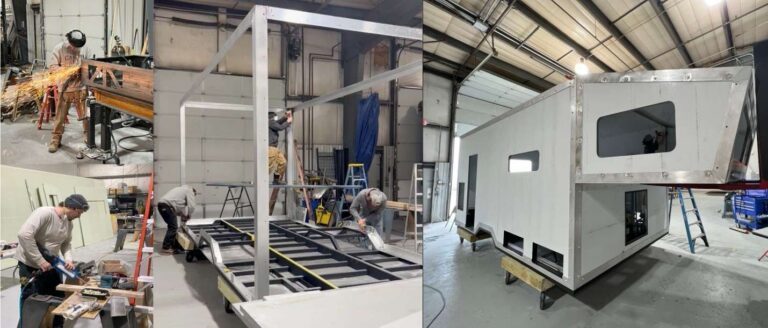
Then the build process starts. Versus a production line, we use a “cell” manufacturing approach where work on each stage of the build is done at one location at our facilities until the habitat is complete enough to be mounted on the truck chassis and the final stages of manufacturing are done. Once the basic shell is completed, special carts with materials, parts and tools for plumbing, electrical, HVAC, etc. are brought to the cell where those parts of the build are performed.
There’s a lot more that goes into the design phase than we’ve discussed here. If you’d like to learn more about how we work with our customers to ensure we’re designing the adventure camper of their dreams, drop us a line to schedule a more in-depth discussion.
Up Next
In our next blog in the Wanderbox Builds series, we’ll discuss:
- Frame/Subframe Construction: Our Unique Modular Adventure Camper Platform
- Cabin Construction: Strong, light, Insulated and Highly Customizable
Part 2: Subframe & Habitat Body: Wanderbox’s Unique Modular Adventure Vehicle Platform
If you haven’t already, sign up for our newsletter if you want to know when the next one hits. Enjoy!