From Campground Dreamers To Wanderbox Owners
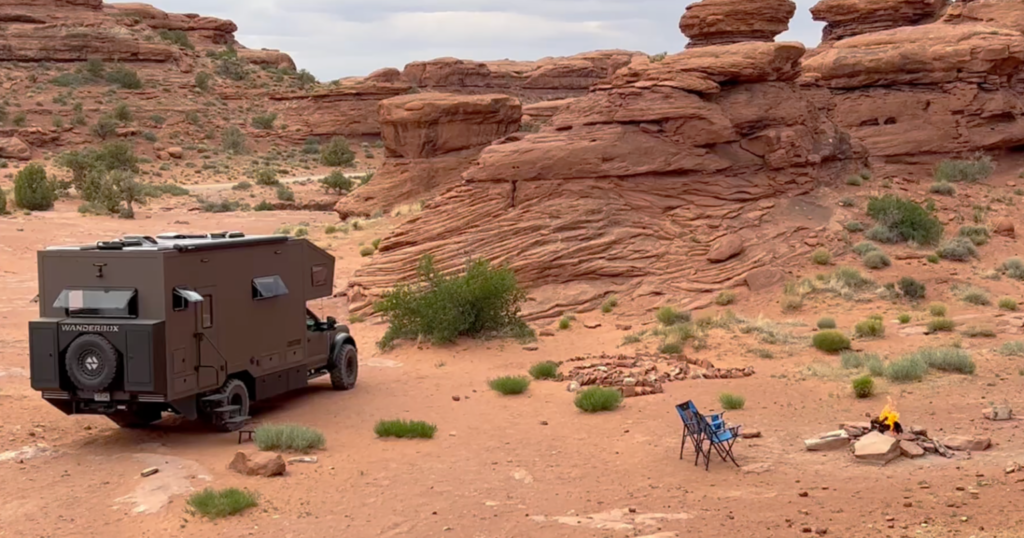
When Jay and Kelly Ohanesian first started camping together, they never imagined they’d one day be exploring red rock canyons and remote fire roads in a custom-built, off-grid expedition vehicle. But then again, they’ve always done things a little differently.
“We don’t just camp,” Jay said with a laugh. “We plan our camping trips. That’s our fun.”
Their home base is Arizona, where Jay works in commercial real estate development and Kelly is a Formula Governance manager at Coca-Cola. Their weekends, however, belong to the outdoors—especially when they can hit the road in their Wanderbox, affectionately known as the “Wanderbeast.”
“It’s a big brown bear of a truck,” Jay said proudly. “People love it. Even the UPS guy is a fan.”
But before the Wanderbox came into their lives, Jay and Kelly were seasoned RVers who had already spent over a decade building their outdoor lifestyle.
From Porsche and Pop-Tops to Real Overland Capability
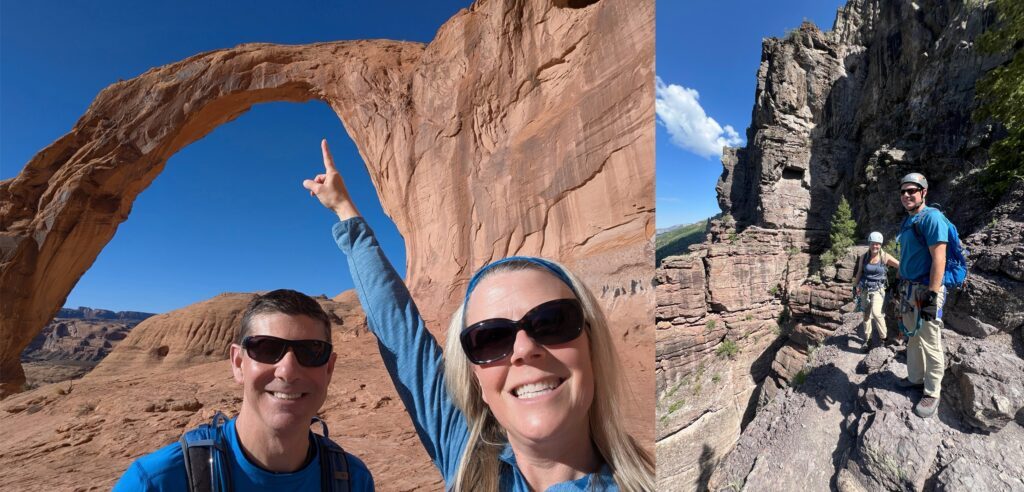
Kelly’s camping roots run deep.
“I grew up camping all over the U.S.,” she said. “We started with tents, then upgraded to a pop-up camper, and eventually a trailer.”
When she and Jay got together, comfort was already high on their priority list. “We never did the tent thing. We like a little luxury when we’re out there,” Jay added. Their first RV together was a 24-foot Tracer Arrow travel trailer. What made it memorable wasn’t just the camper—it was the tow vehicle: a Porsche Cayenne. “We’d pull into campgrounds and people would just stare,” Jay said. “‘Here come the Porsche people.’ It was fun.”
Eventually, they decided to upsize to a 31-foot Winnebago motorhome, which they paired with a Jeep for more rugged access once parked. That rig served them well for nearly seven years—but it had limitations.
“It was tough to drive, not very capable off-road, and the components just didn’t hold up,” Jay said. “Mass-produced stuff. You know how it is—appliances breaking, systems failing. We wanted more.”
The Search for Something Better
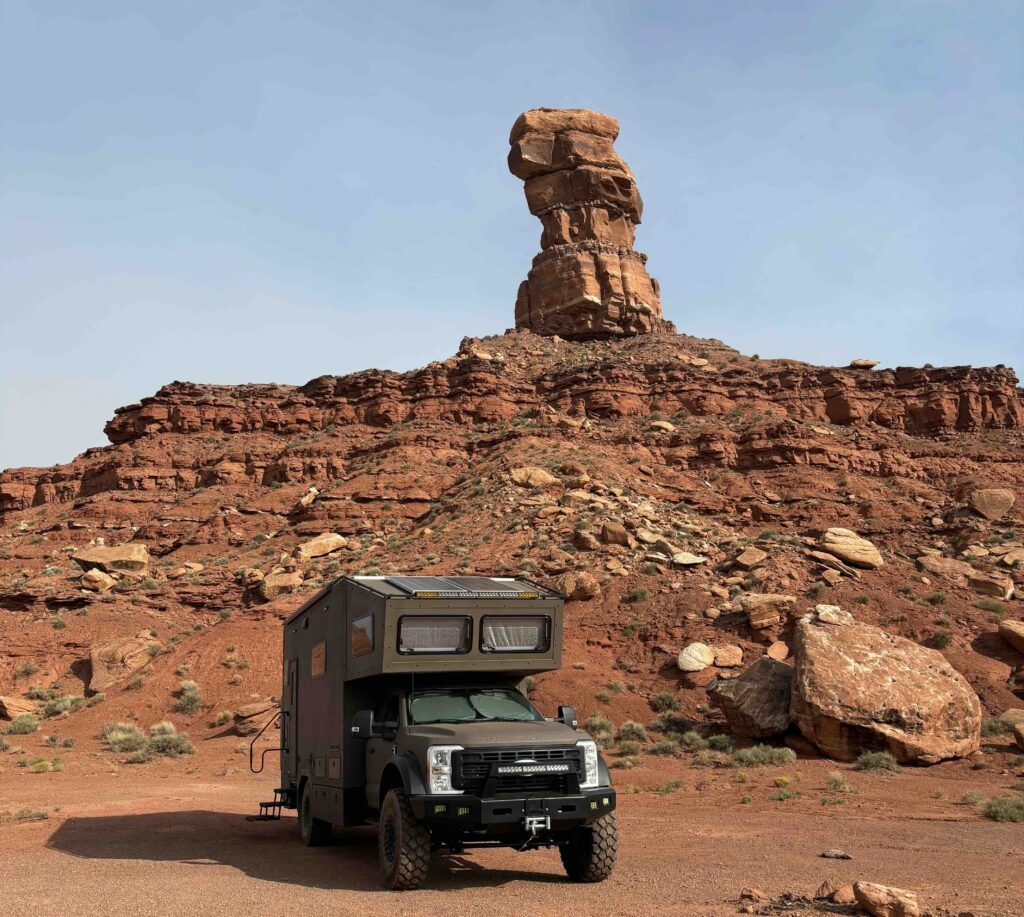
Jay had always been drawn to the idea of overlanding. For him, it wasn’t just about the destination—it was about building a comfortable basecamp in remote places. “I like to hike. I want to be close to the trailhead, not 30 minutes away at a KOA,” he said. “So I started researching rigs that could get us farther out.”
That research led them down a rabbit hole of YouTube videos, blog posts, and online forums. They looked at EarthRoamers, Global Expedition Vehicles, and other high-end off-road motorhomes. But none of them quite fit. “We almost went for an EarthRoamer,” Jay said. “But spending over $800,000 and still getting a wet bath? That was a dealbreaker.”
The breakthrough came when they stumbled across Wanderbox. Jay remembers the moment vividly. “It was the first big Wanderbox—the original prototype. I saw it in a feed and thought, ‘This is really cool.’ A little big, but really cool.”
They spotted the Wanderbox team at the Overland Expo in Flagstaff. After a walk-through and a few of those “You better buy now before the price goes up” emails, Kelly gave Jay the green light: “Let’s do it.”
Why Wanderbox Was the Right Fit
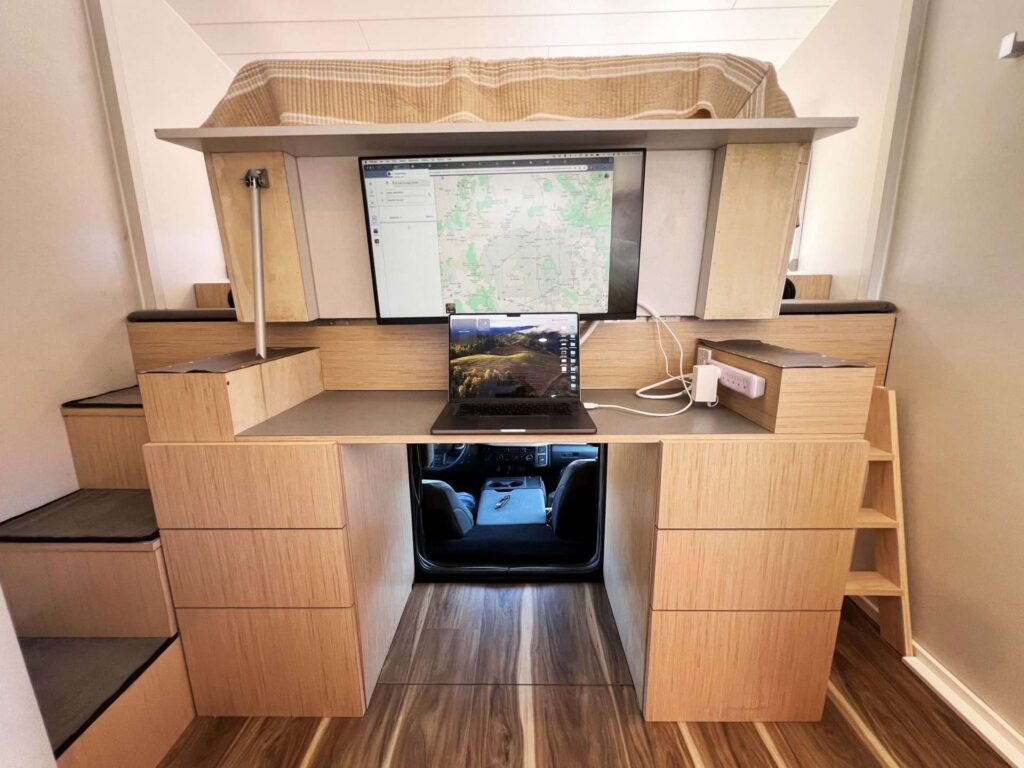
Jay and Kelly weren’t just looking for a beautiful rig—they had a long list of practical requirements based on years of experience.
Jay summed it up: “It had to be off-grid capable for 10 days. Big solar, big battery, lots of water. It had to be maneuverable and comfortable. And I wanted a dry bath. No exceptions.”
Kelly, meanwhile, was focused on the kitchen. “I love to cook, even when we’re off-grid,” she said. “The Wanderbox gave me a full cooktop, convection oven, and even a dishwasher…so Jay doesn’t complain about doing all the dishes. I’ve cooked meals with three burners going at once. It all works beautifully.”
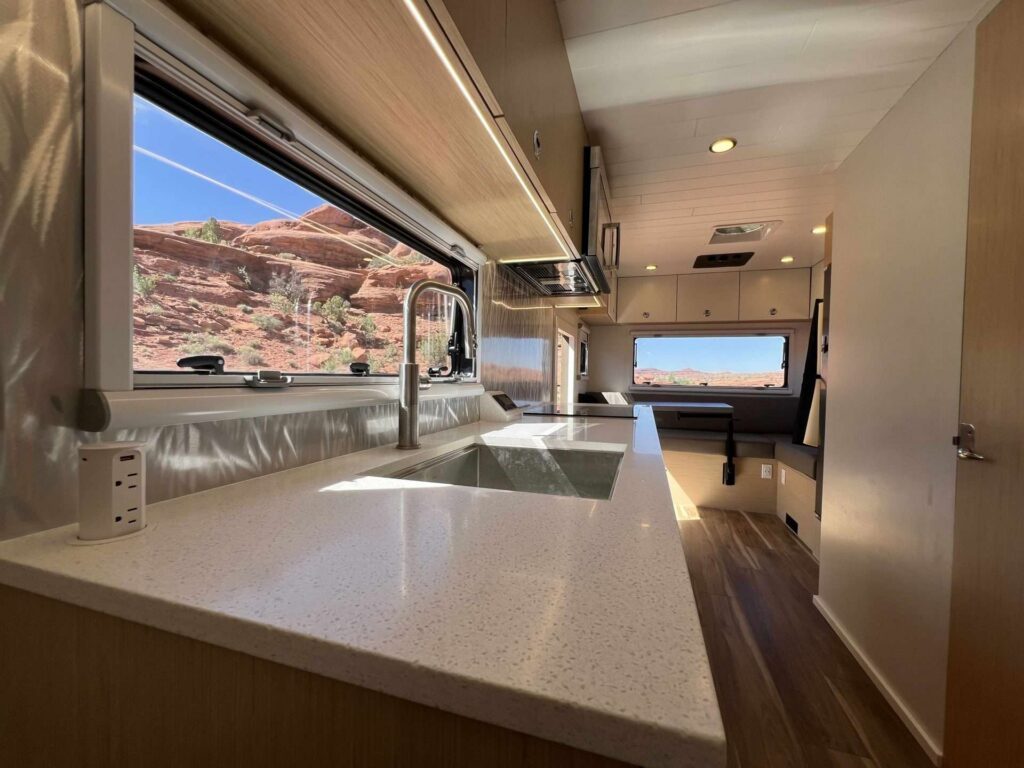
Kelly, meanwhile, was focused on the kitchen. “I love to cook, even when we’re off-grid,” she said. “The Wanderbox gave me a full cooktop, convection oven, and even a dishwasher…so Jay doesn’t complain about doing all the dishes. I’ve cooked meals with three burners going at once. It all works beautifully.”
The Wanderbox also offered something that few expedition vehicles can: meaningful customization. “So many rigs let you pick your color—gray, tan, or beige—and that’s it,” Jay said. “With Wanderbox, we got to decide what compromises we were willing to make. That was huge.”
They chose a 29-foot model for its balance of living space and maneuverability. “It’s the smallest one they offered at the time,” Jay said. “Now that there’s a 27-footer, we might have considered it, but 29 has worked well for us.”
From First Drive to Field Lessons
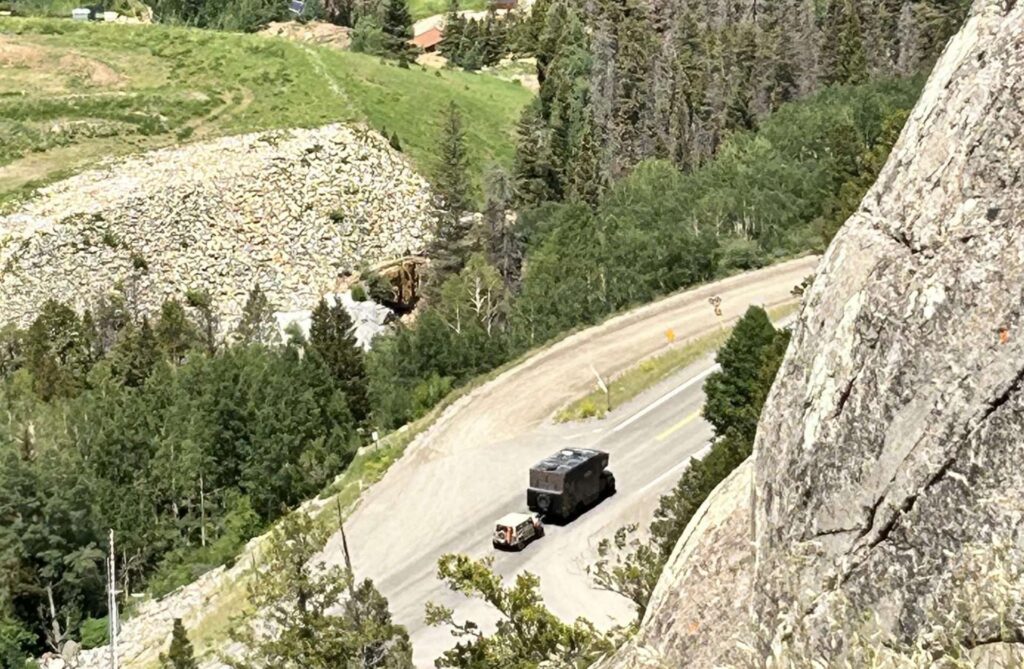
Once their Wanderbox—now officially dubbed Wanderbeast—was delivered, Jay and Kelly wasted no time breaking it in.”
Their trips have taken them through Telluride above 9000 ft of elevation, into Utah’s Valley of the Gods, across dusty fire roads, and deep into Wyoming’s wilderness. With a personalized license plate that reads WBEAST, the rig draws attention wherever it goes.
“People are always asking, ‘What is this thing?’ or ‘How much does it cost?’” Jay said. “The tires get a lot of attention, and when we invite people in, they’re blown away. They always say it looks European.”
That attention is fun—but the real reward has been the freedom the rig offers. “We’ve gone three days without seeing a soul,” Jay said. “Just us, the dog, and stunning scenery. That’s what we love.”
Living the Dream—and Learning as They Go
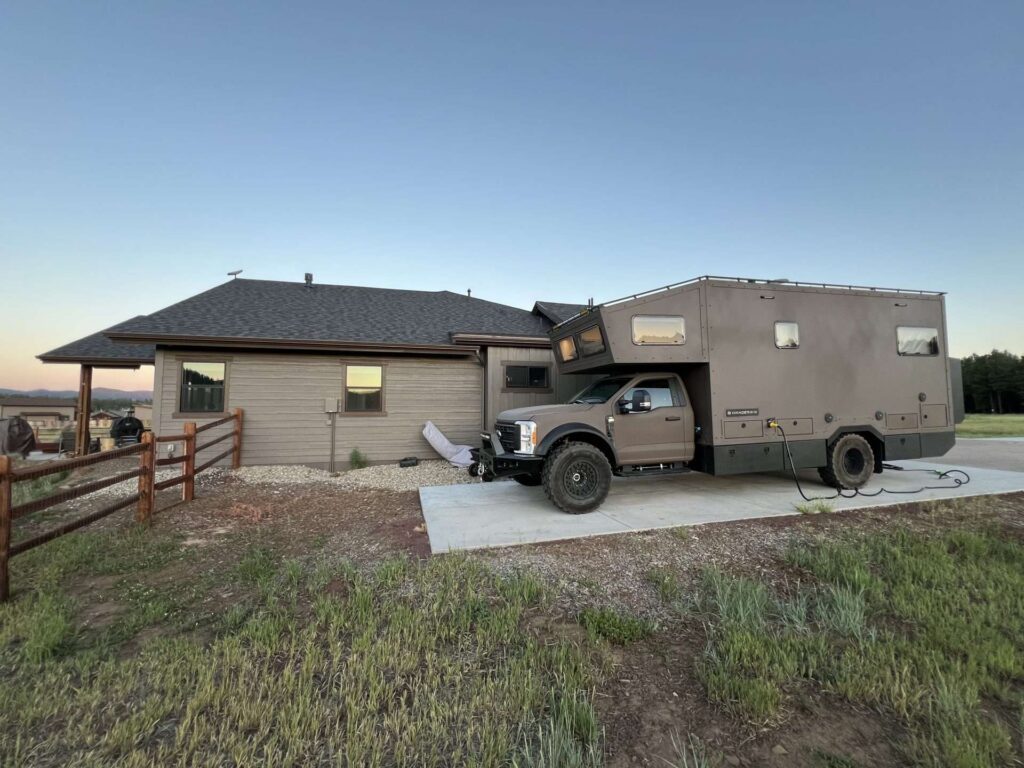
Jay and Kelly are thrilled with their Wanderbox. And they’re still discovering new things they love about it.
“It drives like a dream,” Jay said. “Sure, the tires are noisy, but they’re military-grade. That’s the trade-off.”
Kelly has been enjoying all the comforts of home. “I get my hot shower and latte in the morning then spend the day either working comfortably from the couch or heading out for a hike.”
And Ripley? “She hated our old RVs. This one, she loves,” Jay said. “She sleeps in the bed with us, with windows all around. She’s living her best life.”
They’ve worked from the rig using Starlink, streamed video from remote campsites, and learned how to pick boondocking spots with just the right mix of sunlight and sky exposure.
“Too many trees and you lose solar and internet,” Jay said. “You’ve got to find the balance.”
Advice for Future Wanderbox Owners
For anyone considering a Wanderbox, Jay has plenty of insights.
“Do your homework. We spent a year researching. Compare every feature, every competitor. Know what you want, and know what you’re willing to give up.” His wish list for future builds includes an optional ultralight package and a better internal troubleshooting guide. “There should be a checklist for everything—just like a flight crew,” he said. “We’ve learned the hard way. You need a copilot.”
Kelly agreed. “We’ve had the fridge come open, the dishwasher door swing out. You forget one latch, and it’s chaos.”
But both of them agree: the Wanderbox has changed how they travel—and how they live. “It’s the ultimate work-and-play vehicle,” Jay said. “You can go almost anywhere, stay as long as you want, and do it all in comfort.”
Looking Ahead
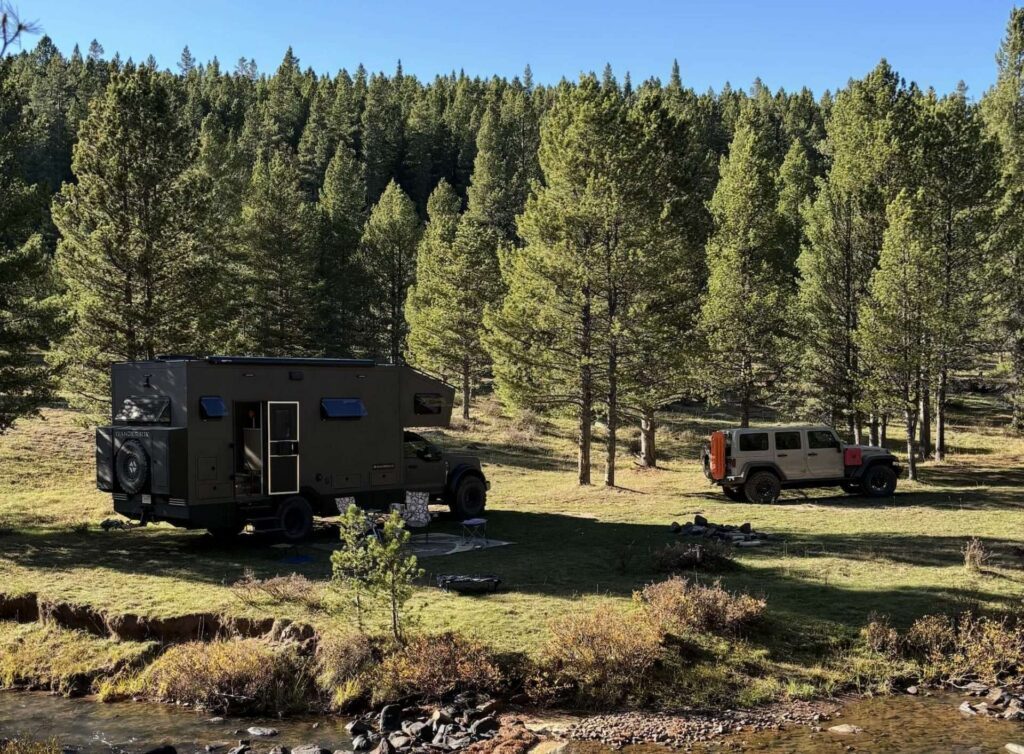
They don’t see themselves changing rigs anytime soon. “I hope we have this one for 10 years or more,” Jay said. “Maybe in the future we’ll want something smaller—or something totally over-the-top. Who knows.”
Whether it’s dry desert canyons or lush wine country hillsides, Jay and Kelly are doing what they love most—exploring the world, one remote campsite at a time.
“And we’re doing it in style,” Kelly added with a smile.